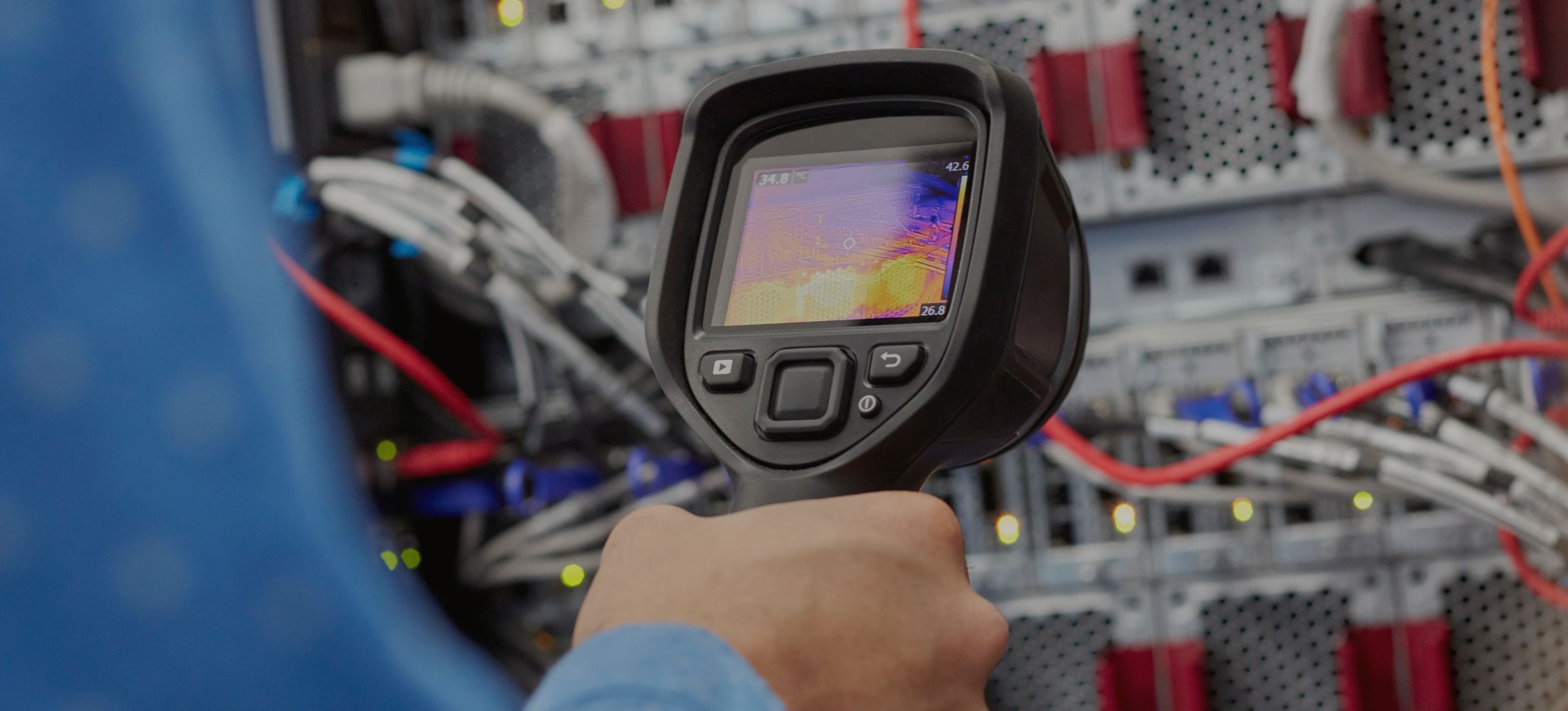
What is Thermography Testing?
Thermography testing or infrared thermography (IRT) for electrical systems, is a specialized application of thermography focused on inspecting electrical equipment for abnormalities based on temperature variations. It’s essentially using a thermal camera to see “heat signatures” of electrical components, potentially revealing hidden problems before they lead to failures or even fires.
Applications of Thermography Testing are:
- Identifying potential problems with electrical systems
- Identifying areas of poor insulation on electrical components that may lead to overheating or fire
- Assessing the condition of insulation on cables and wires that may have been damaged by heat stress
- Identifying areas of poor bonding between wires and terminals which can lead to shorts or open circuits in electrical equipment
Benefits of Thermography Testing:
Thermography testing is a valuable tool for maintaining the health and safety of electrical systems. By proactively identifying potential problems through heat signatures, it helps prevent costly breakdowns, improve safety, and optimize system performance.
- Preventative maintenance: Early detection of problems allows for corrective action before expensive failures and downtime.
- Safety improvement: Identifies potential fire hazards due to electrical issues, minimizing safety risks.
- Reduced costs: Proactive maintenance saves money compared to reactive repairs and potential damage from major failures.
- Non-destructive and safe: No disruption to operations or risk of damage to equipment during testing.
- Fast and efficient: Covers large areas quickly and provides immediate visual results.
Thermography Testing can Verify Followings:
- Power distribution panels and switchgear
- Motors and generators
- Transformers and cables
- Circuit breakers and fuses
- Lighting systems
- Control panels and electronics
Choose Bhagirathi Energy for Thermography Testing
Bhagirathi Energy specializes in the detection of electrical faults and malfunctions, which can be extremely dangerous for both humans and property. Our thermographic testing services are used by companies across the country who wish to ensure that their equipment is functioning properly, and is safe for use.
Thermography Risk Categorization shall be based on the following Standards:-
- NFPA 70B (National Fire Protection Association)
- NETA (International Electrical Testing Association)
Electrical Thermography Risk Levels:
Alarming Level:
- Delta temperature (differential temperature between the maximum & minimum / temperature near the object) more than 16 degree centigrade.
- Failure could result in major fire / explosion / over-pressure situation /major abnormality.
- Any of the hazardous situations mentioned in Note 1.
Caution:
- Delta temperature (differential temperature between the maximum & minimum temperature) between 4 to 15 degree centigrade.
- Impact may be confined to the equipment.
- Failure may not have a large impact on safety / environment / production but repair cost may not be insignificant.
Check & Monitor:
- Delta temperature (differential temperature between the maximum & minimum temperature) between 1 and 3 degree centigrade.
- Mostly of a minor / regular disruption that will not affect safety / production / environment.
Normal Level:
- Normal temperatures
Electrical Thermography Testing Methodology
Data Collection from Client Site
- Site Visit
- Report Preparation and submission of Draft report
- Draft report review by Client
- Final Report Submission (after incorporating client points If any)
- Thermography After rectification (Optional)